
Quick answer
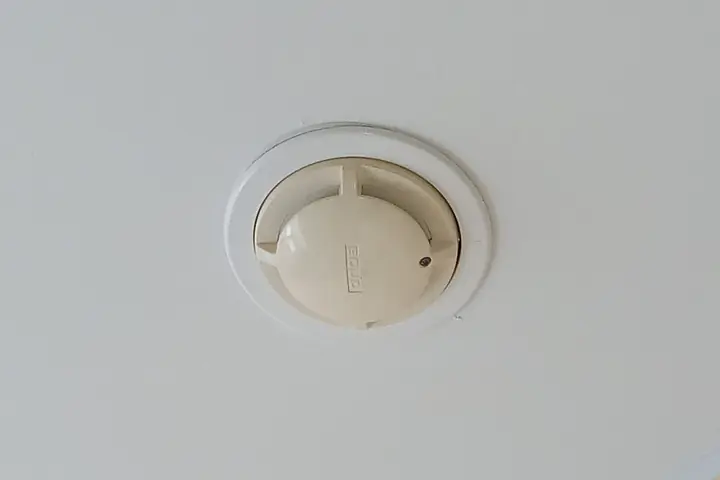
Alhambra homes often have a mix of old alarms: a hardwired unit in the hall, battery ones in bedrooms, and nothing for carbon monoxide. We swap each alarm for the same type, read the manufacture stamp on every one, and press test on each before leaving.
Photos to text us for a quote
- A wide shot showing where every alarm sits
- The manufacture stamp printed on the back
- The plug or pigtail behind a hardwired unit
- Bedrooms, hallway and stairs, roughly sketched
- The brand and model of the one that chirps
What’s included
- Old battery detectors replaced with sealed 10-year models
- Hardwired detectors swapped on the existing connector and mounting plate
- Carbon monoxide alarms added near bedrooms and on each level
- Combination smoke and CO detectors where one device fits best
- Nuisance-alarming and chirping detectors diagnosed and replaced
- Install date written on every unit and old detectors removed
What we don’t do
- Adding circuits, upgrading the panel or swapping breakers; those are outside our scope.
- Running wire to a new location in a wall or ceiling.
- Mounting anything heavier than its box is rated to carry.
In Alhambra homes
A city housing report finds roughly 77 percent of Alhambra homes were built before 1980, ahead of wired detectors becoming routine. Section 13113.7 of the California Health and Safety Code requires smoke alarms listed by the State Fire Marshal in each dwelling, and battery units qualify unless a local rule prohibits them. Since July 1, 2014, section 13114 has required any battery-only smoke alarm sold in the state to have a sealed battery rated for at least 10 years.
Get a quote in one text
Send photos of each detector you have now, the label on the back if you can reach it, the number of bedrooms and floors, and whether the home has gas appliances or an attached garage. Our number for photos is (310) 628-9399, and the price comes back before any work is booked.
Carbon monoxide rules
California’s Carbon Monoxide Poisoning Prevention Act of 2010 requires a CO device in single-family homes with a fossil fuel heater or appliance, a fireplace or an attached garage. A gas furnace, water heater or stove puts most Alhambra houses in that group.
Where they go
Per CPSC advice, plan one smoke detector per bedroom, another in the hallway those bedrooms open onto, and at least one on every story. A CO alarm belongs on every story too, near where people sleep, but not up in an attic.
Spots to avoid
The CPSC carbon monoxide fact sheet recommends against putting CO alarms in kitchens or above fuel-burning appliances, and says to keep them away from heating vents and anything that could cover them.
Hardwired sets
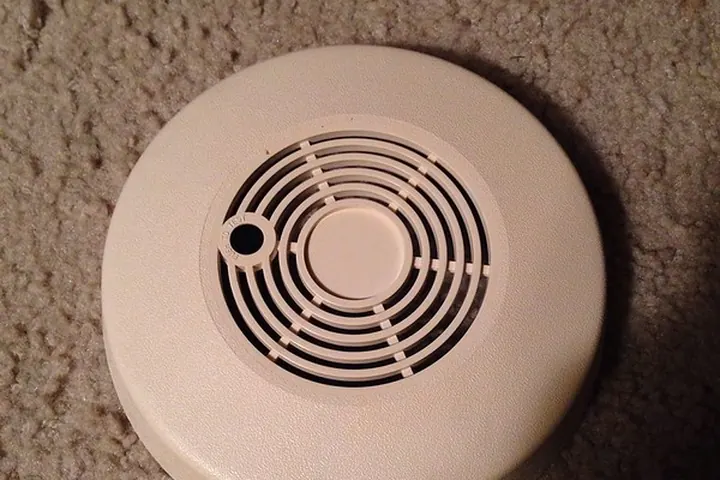
Some houses and most condos built in later decades have detectors wired together. Replacement units generally need to be compatible so one alarm still sets off the others. We match the brand or replace the full set.
Linked alarms
The CPSC says interconnected CO alarms are best, since all of them sound when one does. That matters in two-story Alhambra houses where a bedroom alarm may not be heard downstairs.
What the test button proves
Pushing the button proves the horn and electronics work. It says nothing about whether an aging sensor still reacts to smoke, so the printed replacement age is what to go by.
Monthly checks
The CPSC recommends testing smoke and CO alarms every month. We show you which button to press and what a healthy alarm sounds like.
Condos and apartments
In a condo we replace the detectors inside your unit. Building fire alarm panels and hallway devices belong to the association or building management.
Rental houses
Section 13113.7 makes the owner of a rented single-family home responsible for testing and maintaining its alarms. Landlords often schedule a swap between tenants.
Plaster ceilings
Many pre-war Alhambra homes have plaster ceilings. We drill carefully and use anchors suited to plaster so the base stays tight without cracking the finish.
Where our part ends
Adding a hardwired detector where no wiring exists, or connecting to a monitored fire alarm panel, is outside our scope.
In older Alhambra houses this job often turns up next to outlet, switch and GFCI replacement, light fixture replacement, doorbell and video doorbell installation and ceiling fan replacement, so mention those when you text and we can price them together.
Sources: City of Alhambra, housing needs report (age of housing stock); California Health and Safety Code section 13113.7; California Health and Safety Code section 13114; California Health and Safety Code, Carbon Monoxide Poisoning Prevention Act of 2010; U.S. Consumer Product Safety Commission, CO Alarms; U.S. Consumer Product Safety Commission, Carbon Monoxide Fact Sheet.
Smoke detector and CO alarm installation questions from Alhambra homeowners
Why does my smoke detector keep going off for no reason?
Dust, steam from a shower or cooking, or an aging sensor. Moving it away from steam and replacing old units usually stops false alarms.
Can a handyman install smoke detectors?
Yes, battery units anywhere and wired units on existing wiring.

Why does my carbon monoxide detector say END?
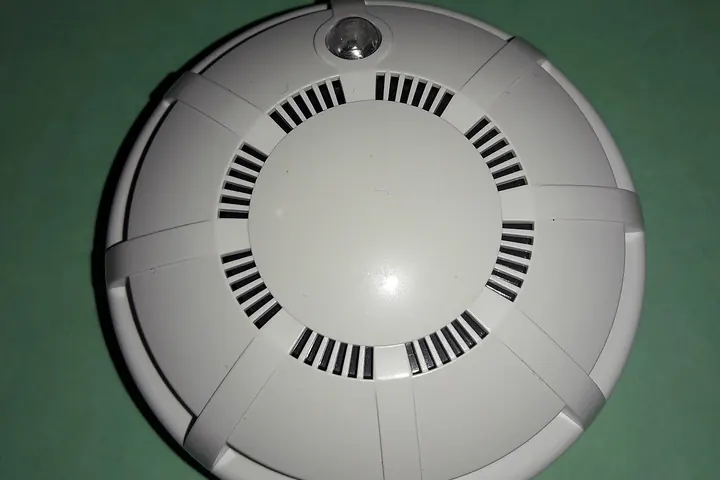
It has reached its end of life and must be replaced. The sensor no longer reads reliably.

Why does my smoke alarm chirp when nothing is burning?
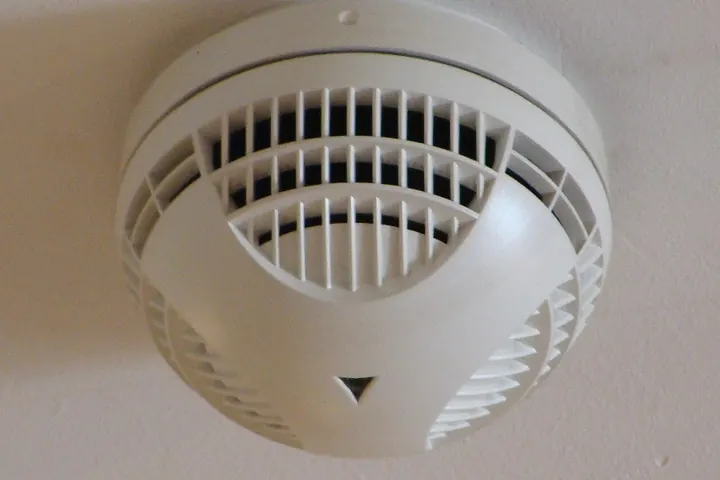
An occasional single chirp is the unit asking for attention: a weak battery, or a sensor at the end of its service life. Look at the stamp on the back to see how old it is.
Why does a smoke alarm beep with the battery taken out?
Hardwired units draw house current, so pulling the battery doesn’t silence them. A missing backup cell or a failing unit causes it; a reset or a matching replacement fixes it.
Related fixes worth a look
- Senior home safetySafety checks for older parents.
- ChildproofingSafety work for homes with kids.
- Fall home maintenanceAlarm tests on the fall list.
- Outlet and GFCI replacementSmall electrical swaps.
Repair guides for this job
- Living with two-prong outlets in an older homeWhy many older Alhambra homes still have two-prong outlets, what an ungrounded outlet means for you, and how a GFCI replacement can add protection.
- Replacing ceiling and wall fixtures in a 1920s houseReplacing a light fixture in an older Alhambra home: shallow or missing boxes, plaster ceilings, heavy lanterns, and checking the old wiring first.
- Putting a ceiling fan where an old light used to hangHow we install ceiling fans in 1920s and 1930s Alhambra rooms where the ceiling box was built for a light, plus wall switch options and balance tips.
- Bathroom fans for bathrooms that only had a windowMany 1920s and 1930s Alhambra bathrooms were built with only a window for ventilation. Here is how a quiet exhaust fan helps, and how we replace noisy ones.
Looking for a handyman in Alhambra for more than one job? Send the whole list and we’ll price it together.
We serve Alhambra first, plus Monterey Park, San Gabriel and other nearby cities. Have a question? See the handyman FAQ.